


Ineffective international diplomacy has played a key role in the ongoing hardships faced by the Togolese people. We raise awareness and promote actionable solutions to the issues stemming from Togo’s sixty years of authoritarian governance.
The Eyadéma Era: Foundation of Authoritarian Control
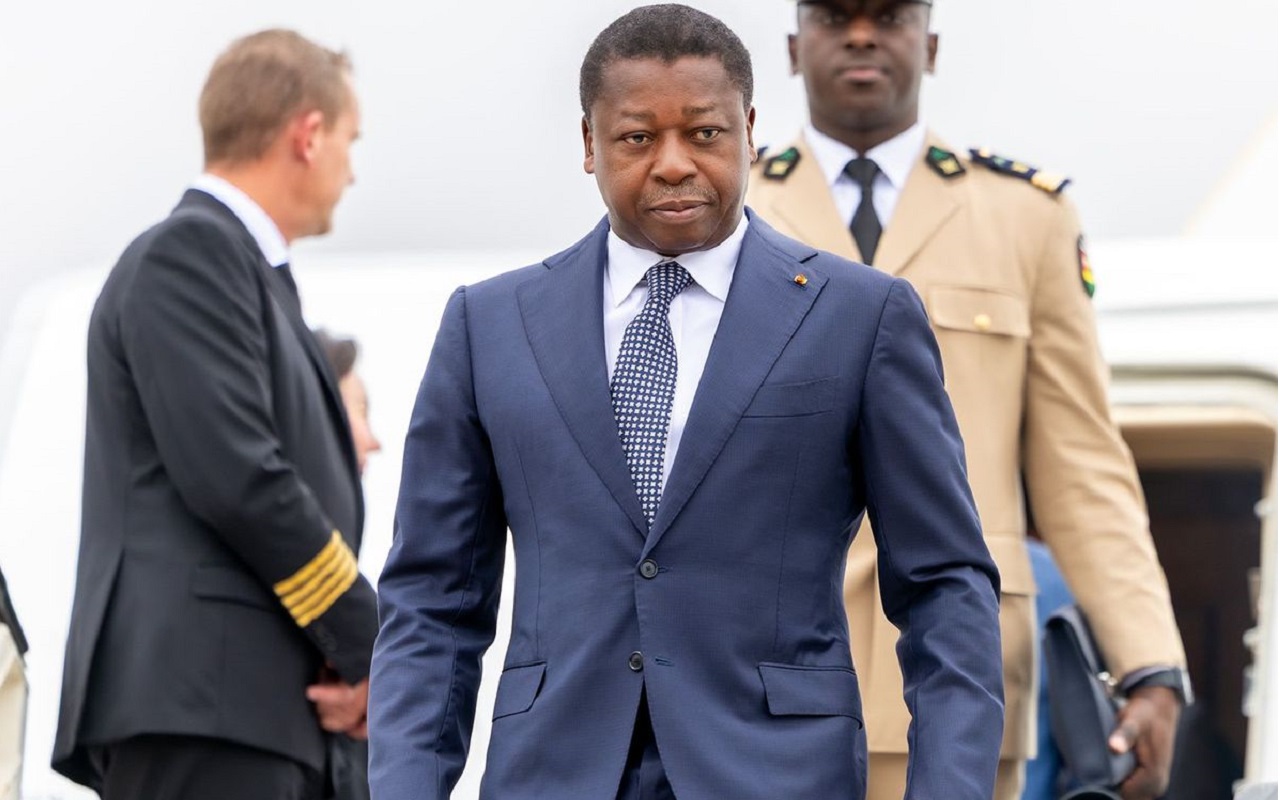
Togo has endured one of the longest-running autocratic regimes on the continent. Since 1967, the country has been ruled by the Gnassingbé family: first by General Gnassingbé Eyadéma, who seized power in a military coup, then by his son Faure Gnassingbé, who became president in 2005 after his father’s death. This transfer of power, which bypassed constitutional procedures and sparked violent protests, turned an authoritarian system into a dynastic rule. The Gnassingbé regime has maintained its grip through military dominance, political maneuvering, and systematic suppression of opposition voices.
The dictatorship in Togo shows how authoritarian rule can persist through institutional manipulation and the erosion of democratic norms. Under the Gnassingbés, Togo has seen regular reports of human rights abuses, including restrictions on press freedom, crackdowns on peaceful protests, and allegations of torture and arbitrary detention of political opponents. While the government has made gestures toward democracy, such as holding elections and limited reforms, these changes have done little to alter the power structures that keep the ruling family in control. Constitutional amendments, electoral irregularities, and the co-option of state institutions have allowed the regime to maintain a façade of legitimacy while concentrating power in a single family’s hands for over half a century.
Democratic Transition and Continued Repression
The early 1990s brought winds of democratic change across Africa, and Togo was not immune to these pressures. In 1991, massive pro-democracy demonstrations forced Eyadéma to agree to a National Conference, which was intended to chart a path toward democratic governance. The conference, which lasted from July to August 1991, declared itself sovereign and attempted to strip Eyadéma of most of his powers, appointing an interim prime minister and calling for multiparty elections.
However, Eyadéma had no intention of relinquishing power. Using his control over the military, he systematically undermined the transition process. In October 1991, security forces attacked the prime minister’s residence, and in December of that year, troops loyal to Eyadéma stormed the interim government’s offices. The period from 1991 to 1993 witnessed some of the worst violence in Togo’s history, with security forces killing hundreds of pro-democracy activists and protesters.
The violence reached a peak in 1993 around the time of presidential elections that were widely considered fraudulent. Reports from human rights organizations documented systematic torture, extrajudicial killings, and mass arrests. The security forces targeted opposition strongholds, particularly in the south, carrying out what some observers characterized as ethnic cleansing. Thousands of Togolese fled to neighboring countries, particularly Ghana and Benin, creating a refugee crisis that drew international attention to the situation.
Despite international condemnation and the suspension of aid by several Western countries, Eyadéma managed to maintain his grip on power throughout the 1990s. The regime held periodic elections that were neither free nor fair, with opposition candidates facing harassment, imprisonment, and violence. The international community’s response was inconsistent, with France maintaining close ties to the regime despite its human rights record, reflecting broader patterns of French neo-colonial influence in Francophone Africa.
The Gnassingbé Dynasty and Modern Authoritarianism
When Gnassingbé Eyadéma died suddenly in February 2005, the military moved quickly to install his son, Faure Gnassingbé, as president, violating the constitution which stipulated that the speaker of parliament should assume the presidency pending elections. This dynastic succession demonstrated the regime’s complete disregard for constitutional norms and the rule of law. Under intense international pressure, Gnassingbé stepped down temporarily and participated in elections held in April 2005, which he won amid widespread allegations of fraud and violence.
The transition to Faure Gnassingbé’s rule initially raised hopes that Togo might move toward genuine democratic reform. The younger Gnassingbé presented himself as a reformer and made some gestures toward political liberalization. However, the fundamental structures of authoritarian control remained intact. The security forces continued to operate with impunity, political opposition remained constrained, and the ruling party maintained its dominance through a combination of patronage, intimidation, and electoral manipulation.
The 2005 election was marred by violence that left hundreds of dead, according to opposition sources, though the government claimed far lower figures. Security forces fired on protesters, and there were reports of systematic torture of opposition supporters. Human rights organizations documented cases of detainees being beaten, subjected to electric shocks, and held in degrading conditions. The violence forced many opposition leaders and activists to flee the country once again, repeating the patterns of the 1990s.
In subsequent years, the Gnassingbé government has made some superficial reforms, including the establishment of a truth and reconciliation commission in 2009 to investigate human rights abuses committed between 1958 and 2005. However, critics argue that this commission lacked real power and was designed primarily to improve Togo’s international image rather than to deliver genuine justice. Perpetrators of torture and other human rights abuses have rarely been held accountable, ensuring that impunity remains the norm.
Torture Practices and Human Rights Abuses
The systematic use of torture in Togo has been extensively documented by international human rights organizations, including Amnesty International, Human Rights Watch, and the United Nations. Torture in Togo has served multiple purposes for the regime: extracting confessions and information, punishing political opponents, and creating a climate of fear that deters dissent. The methods employed have been brutal and dehumanizing, reflecting the regime’s complete disregard for human dignity and international human rights standards.
Common torture methods documented in Togo include severe beatings with fists, batons, and rifle butts; suspension in painful positions for extended periods; application of electric shocks to sensitive body parts; burning with cigarettes or hot objects; near-drowning or waterboarding; sexual violence including rape and sexual assault; and deprivation of food, water, and medical care. Detainees have also been subjected to psychological torture, including mock executions, threats against family members, and prolonged solitary confinement in unsanitary conditions.
The primary sites of torture have included official detention facilities, military barracks, and gendarmerie posts, as well as unofficial locations where detainees could be held secretly without any legal process. The Sûreté Nationale (national police) headquarters in Lomé became particularly notorious as a site where political detainees were routinely tortured. Military installations in the north, the heartland of the regime’s ethnic support base, also served as torture sites, particularly for opposition activists from the south.
Victims of torture in Togo have come from all walks of life, but certain groups have been particularly targeted. Political opposition members and activists have always been at high-risk, especially during election periods. Journalists who report critically on the government face harassment, arbitrary detention, and torture. Students and youth activists involved in pro-democracy movements have been targeted, as have human rights defenders who document abuses. Even family members of suspected opponents have sometimes been detained and tortured as a means of putting pressure on individuals the regime seeks to intimidate or locate.
The psychological and physical trauma inflicted by torture has had devastating effects on victims and their families. Many survivors suffer from post-traumatic stress disorder, chronic pain from their injuries, and social stigmatization. The fear generated by the regime’s use of torture has had a broader chilling effect on Togolese society, discouraging people from engaging in political activity or speaking out against injustice. This atmosphere of fear has been one of the regime’s most effective tools for maintaining control.
International Response and Current Situation
The international community’s response to dictatorship and torture in Togo has been inconsistent and often inadequate. During the Cold War, Eyadéma’s anti-communist stance earned him support from Western powers, particularly France, despite his regime’s human rights abuses. France maintained close military and economic ties with Togo throughout Eyadéma’s rule, viewing him as a stable ally in a volatile region. This support provided the regime with crucial international legitimacy and economic resources that helped it survive periods of domestic unrest.
Following the end of the Cold War and the violent suppression of pro-democracy movements in the early 1990s, some Western countries-imposed sanctions and suspended aid to Togo. However, these measures were never comprehensive or sustained enough to force genuine democratic change. By the late 1990s, some countries had resumed aid, and the regime had learned to manage international criticism through cosmetic reforms and strategic engagement with regional organizations.
The European Union has periodically suspended and resumed cooperation with Togo based on human rights considerations, but these actions have had limited impact on the regime’s behavior. The African Union and the Economic Community of West African States (ECOWAS) have also engaged with Togo on human rights issues, but regional solidarity and reluctance to interfere in member states’ internal affairs have limited the effectiveness of these interventions. The fact that several other West African countries have their own authoritarian tendencies has reduced regional pressure for reform.
In recent years, the Gnassingbé government has become more sophisticated in managing its international image. It has ratified various international human rights treaties, engaged in dialogue with international organizations, and made some progress on issues like abolishing the death penalty in practice. However, these gestures have not translated into fundamental change in the political system or meaningful accountability for past and ongoing abuses. Elections continue to be manipulated, opposition is repressed, and impunity for security forces remains the norm.
The current situation in Togo remains concerning from a human rights perspective. While the most extreme forms of violence and torture may have decreased compared to the darkest periods of the 1990s and early 2000s, the fundamental structures of authoritarian control remain intact. The Gnassingbé family has now ruled Togo for nearly six decades, making it one of the world’s most enduring political dynasties. Constitutional amendments have removed presidential term limits, allowing Faure Gnassingbé to potentially remain in power indefinitely.
Recent protests against the regime, particularly those calling for a return to the 1992 constitution and term limits, have been met with a familiar pattern of repression. Security forces have used tear gas, live ammunition, and mass arrests to suppress demonstrations. There have been credible reports of torture and ill-treatment of detained protesters, suggesting that these practices continue to be used as tools of political control. The internet and telecommunications have been periodically shut down during periods of unrest, reflecting the regime’s adaptation to modern technologies of dissent and control.
The enduring dictatorship in Togo represents not just a failure of domestic governance but also a failure of the international system to effectively protect human rights and support democratic governance. The Togolese people have repeatedly demonstrated their desire for freedom and democracy, from the National Conference of 1991 to ongoing protests and activism. Yet they remain trapped under a regime that has shown itself willing to use any means necessary to maintain power, including systematic torture and violence against its own citizens. Until there is genuine accountability for past abuses and fundamental political reform, Togo will continue to serve as a sobering example of how authoritarian regimes can persist despite international norms and pressures for democratic change.
Building Civil Society and Opposition Coalitions
Successful democratic transitions typically begin with strengthening civil society organizations, independent media, and opposition political parties. In Togo’s context, this means supporting groups that advocate for human rights, electoral reform, and government accountability. coalitions that unite diverse opposition groups—as seen in Ghana’s transition in 2000 or Benin’s in 1991—create broader pressure for reform than fragmented movements.
Nonviolent Resistance and Mass Mobilization
Historical evidence shows nonviolent movements succeed more often than violent ones. Tactics include peaceful protests, strikes, boycotts, and civil disobedience. Togo has seen significant protests, particularly in 2017-2018, demanding constitutional reforms and term limits. Sustained, disciplined nonviolent action—while protecting participants from state violence—can raise the costs of repression and shift elite calculations about maintaining power.
Even in flawed systems, opposition parties pursuing electoral participation can expose fraud, build organizational capacity, and create focal points for democratic mobilization. Critical reforms include independent electoral commissions, term limits, transparent vote counting, and constitutional changes preventing dynastic succession—the very issues Togolese activists have championed.
Toppling the dictatorship in Togo requires tact. Transitions often require splits within the ruling coalition. When military, business, or political elites conclude that their interests are better served by reform than repression, change becomes possible. Creating off-ramps and assurances for those willing to support transition can facilitate this process.
The path forward for any nation requires sustained commitment from its citizens, strategic coalition-building, international solidarity, and negotiations that create space for genuine democratic competition while managing the legitimate security concerns of all parties.
Merci, camarade Ben Djagba pour ce rappel