

I wholeheartedly believe that misaligned international diplomacy plays a significant role in the ongoing challenges faced by the Togolese people. Therein, this seeks to engage a wider audience and promote constructive measures to address the issues stemming from the 60-year dictatorship in Togo.
The air in Togo hangs heavy, not just with the humid heat of West Africa, but with a suffocating despair. It’s a palpable weight, pressing down on shoulders already bowed by the relentless march of misfortune. The vibrant hues of the markets, once a testament to Togolese resilience, now seem muted, the laughter of vendors tinged with a weary resignation. Each sunrise offers not a promise of a better day, but a stark reminder of the deepening chasm between the pronouncements from the corridors of power and the brutal reality faced by ordinary citizens. The whispered conversations in shaded alleys, the hushed anxieties shared over bowls of fufu, all echo the same desperate plea: for an end to this perpetual state of uncertainty, for a leadership that sees beyond the next election cycle, for a future that doesn’t feel like a perpetual echo of yesterday’s failures. The statistics, chilling as they are, are merely the dry bones of a far more gruesome narrative, a tapestry woven with the threads of broken dreams and extinguished hopes.
The young ones, those who should be the vibrant pulse of this nation, are the most acutely affected. Their aspirations, once as bright and boundless as the Atlantic horizon, are being systematically eroded. Education, the supposed ladder to opportunity, has become a Sisyphean task, its foundations weakened by a system that prioritizes patronage over progress. The promise of a secure future, a basic human right, is receding further with each passing day, replaced by the gnawing fear of unemployment, of begging, of a life lived in the shadows of societal neglect. This is not mere economic hardship; it is an amputation of potential, a systematic disenfranchisement of a generation whose voices deserve to be heard, not silenced by the deafening roar of official indifference. The cycle of misery, once a distant threat, has become an inescapable reality, its tendrils tightening around the very fabric of Togolese society.
And then there are the whispers, the stories that are too painful to be recounted in polite company, but that circulate nonetheless. Stories of individuals, pushed to the precipice by an unbearable weight of despair, who see no escape, no light at the end of the tunnel. The rising tide of suicides is not just a statistic; it is a siren call, a desperate lament from souls who have been broken by a system that has failed them at every turn. This is not a problem confined to the margins; it is a symptom of a systemic disease, a testament to the profound and multifaceted crises that have gripped Togo. The human rights abuses, the daily erosion of dignity, the blatant disregard for the well-being of its people – these are not abstract concepts; they are the lived experiences of millions, etched onto the faces of a nation yearning for a breath of fresh air, for a flicker of hope in the encroaching darkness.
The echoes of Sylvanus Olympio’s assassination, a brutal punctuation mark in Togo’s nascent democratic journey, continue to reverberate. It was not merely the silencing of a voice, but the deliberate crushing of a nascent hope, an act that paved the way for a shadow play of power, where the strings were pulled by unseen hands, driven by an insatiable hunger for control. The elites, so eloquently described as a “minority of elites,” wielded their influence like a poisoned chalice, offering a semblance of stability in exchange for the continent’s subjugation. Togo, in its poignant vulnerability, became the starkest illustration of this betrayal, a nation bleeding from wounds inflicted by its own kin, its people systematically stripped of their inherent dignity. The “suitcase diplomacy” became a tool of oppression, a constant whisper of unease, designed not to resolve, but to perpetuate the stagnant status quo, ensuring that any genuine yearning for political evolution was met with swift and decisive strangulation.
This insidious perpetuation of illegitimate power has birthed a multifaceted crisis, a hydra-headed monster whose consequences touch every facet of Togolese life. The economy, starved of genuine investment and preyed upon by those who see it as a personal larder, languishes. Education, the beacon of future progress, is dimmed by underfunding and a curriculum often shaped more by political expediency than by intellectual pursuit. Healthcare, a fundamental human right, becomes a luxury, accessible only to a privileged few, while the majority grapple with preventable diseases and inadequate care. The very fabric of society is frayed, trust eroded, and the inherent humanity of the Togolese people tested daily by the relentless pressure of this manufactured desolation. The continent, a tapestry of vibrant cultures and immense potential, is being systematically devalued, its resources siphoned off, and its people relegated to the margins by those who should be its most ardent protectors.
The narrative of betrayal is not unique to Togo; it is a cautionary tale echoed across the African continent. The Trojan horse, once envisioned as a gift, has become a devastating metaphor for the internal machinations that undermine collective progress. It represents the insidious infiltration of self-interest, the silent erosion of national sovereignty, and the insidious embrace of external manipulation disguised as aid or partnership. The elites, blinded by their own avarice or perhaps held captive by external forces, have become the architects of their own continent’s undoing. They are the custodians of a poisoned chalice, offering a bitter draught that masquerades as progress, while simultaneously draining the lifeblood of the very people they claim to represent. The continuation of this cycle of exploitation is not an inevitability, but a consequence of choices – choices made by those in power, and choices yet to be made by those who dare to dream of a different future.
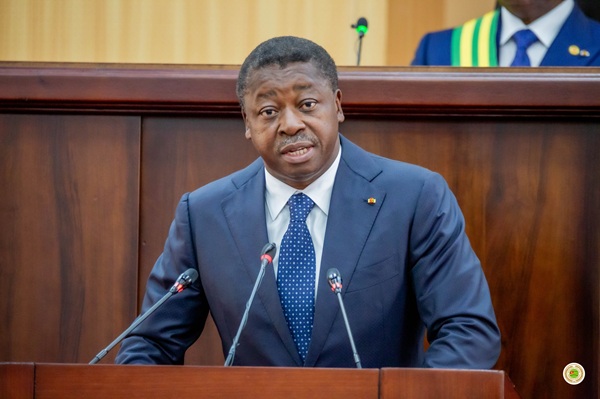
The gilded halls of the Presidential Palace, once echoing with the pronouncements of a figurehead, now hummed with a different kind of power, a more tangible, less symbolic authority. President Faure Gnassingbé, no longer the wearer of a constitutional crown that signified little more than national decorum, had effectively rewritten the script of Togolese governance. The carefully worded amendment, a masterclass in political theatre, had transformed his ancestral throne into a gilded cage, its occupant a silent spectator to the machims of state. Meanwhile, the man who now pulled the strings, the newly christened “president of the council,” moved with the quiet decisiveness of a chess grandmaster, each move calculated to solidify his grip.
For over two decades, Gnassingbé had navigated a treacherous political landscape, a journey marked by allegations of electoral manipulation and the ghost of his father’s iron-fisted rule. The shadow of Gnassingbe Eyadema, a man whose 38-year reign had imprinted itself onto the very soul of Togo, loomed large. Yet, the son had, in his own way, outmaneuvered the legacy. The constitutional shift was not an abdication, but an evolution, a strategic rebranding that allowed him to shed the constraints of a limited term while retaining the ultimate reins of power. The ceremonial presidency, a hollow title now, served as the perfect decoy, a silken glove over an iron fist.
The international community, accustomed to the predictable rhythms of Togolese politics, watched with a mixture of apprehension and weary resignation. The “president of the council,” a figure whose name was whispered with a reverence bordering on fear, was a known quantity. His ascent had been less a victory, more an inevitability. The terminology borrowed from Spain and Italy, a subtle nod to established, enduring systems of governance, was not merely linguistic flair. It was a statement of intent, a declaration that this new iteration of power was not transient, not subject to the whims of the electorate or the ticking clock of a mandate. It was, in essence, a coronation by decree, a perpetuation of an era, cloaked in the guise of reform.
M66 – The Movement of June 6
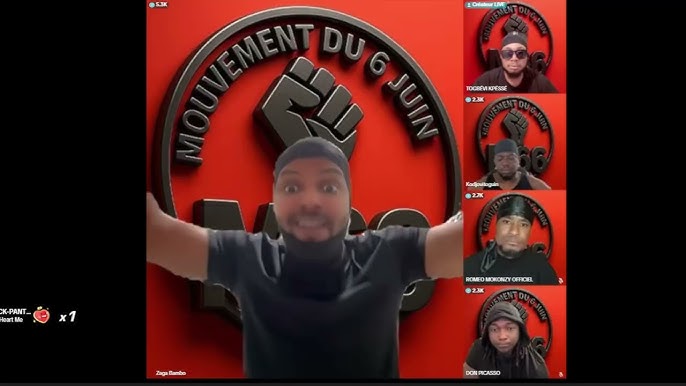
The digital whispers of discontent emanating from Togo are growing into a deafening roar, amplified across continents by the unwavering efforts of Togolese activists in the diaspora. At the forefront of this amplified voice is M66, a movement born of frustration and fueled by a relentless pursuit of justice. Their digital battle cry, echoing across social media platforms, is not merely a lament; it is a strategic campaign, meticulously crafted to draw the world’s gaze towards the ongoing human rights violations plaguing their homeland. Each tweet, each shared post, each impassioned plea is a brick in the wall of awareness they are building, a testament to their refusal to let the suffering of their people fade into the digital ether. M66 understands the power of the interconnected world, and they are wielding it with precision, aiming to puncture the veil of silence and force international communities to confront the stark realities faced by Togolese citizens.
Their demand is singular and unwavering: the resignation of Faure Gnassingbé from power. This is not a negotiation, but a declaration. M66 is a force that has coalesced from scattered embers of hope into a burning fire of conviction. They have weathered past disappointments, endured the inertia of global indifference, and yet, their resolve has only hardened. The movement is a testament to the enduring spirit of a people yearning for self-determination, a spirit that refuses to be extinguished by decades of entrenched power. They are not seeking a temporary reprieve; they are demanding a fundamental shift, a dismantling of a system that has, in their view, systematically oppressed its citizens. The phrase “will not back-down an inch” is not hyperbole; it is a solemn vow, a promise etched in the hearts of those who have sacrificed so much and witnessed too little change.
The echoes of M66’s digital pronouncements are beginning to resonate beyond the algorithms and timelines with the motto: Resist, Demand, Rebuild. Diplomats are reportedly taking notice, human rights organizations are re-evaluating their engagement, and the global conversation surrounding Togo, once a hushed murmur, is slowly but surely intensifying. The activists, operating from afar, have become the eyes and ears of a nation whose own voices are often suppressed. They are meticulously documenting every alleged transgression, compiling evidence, and presenting a coherent, undeniable narrative of injustice. The digital realm, once perceived by some as a frivolous space, has been transformed into a vital arena for activism, a platform where the powerless can find their strength and amplify their righteous anger to a world that is finally, albeit reluctantly, beginning to listen.
By Ben Djagba
Salt Lake City, Utah


Un bon article . Écrit avec du bon Anglais de Shakespear! Merci à ce compatriote qui a écrit ça ! Académiquement soutenu.
haut les mains. Merci pour ce text qui attire ‘attention de l’opinion internationale
hmmm. merci pour cette publication avec Anglais bien dosé.