

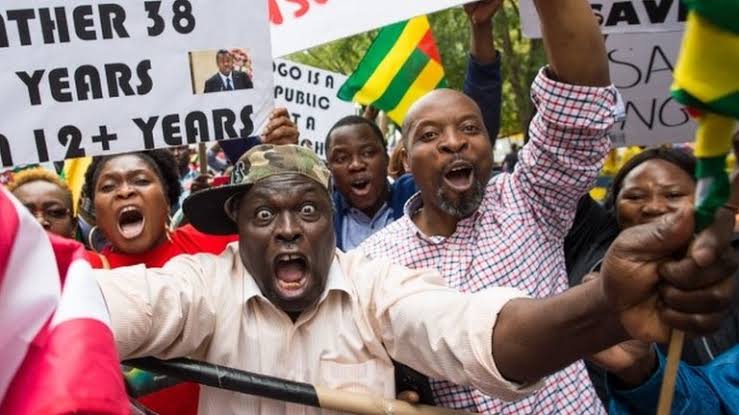
Togo, a small West African nation nestled between Ghana and Benin, has long been synonymous with one of the most entrenched dynasties of authoritarian governance on the African continent. For more than half a century, the country has been governed by a single family — the Gnassingbé dynasty — whose grip on political power has endured through constitutional manipulation, systematic repression, and the calculated suppression of democratic aspirations. This post seeks to examine the origins, mechanisms, and consequences of dictatorship in Togo, as well as the resilience of those who have continued to resist it.
The Foundation of the Dynasty: Gnassingbé Eyadéma (1967–2005)
The roots of Togo’s authoritarian order trace back to 13 January 1967, when General Gnassingbé Eyadéma seized power through a military coup, deposing President Nicolas Grunitzky. What followed was nearly four decades of one-man rule, making Eyadema one of Africa’s longest-serving dictators.
Under his rule, political opposition was outlawed, civil society was systematically dismantled, and the ruling party — the Rally of the Togolese People (RPT) — functioned as the sole legitimate political actor in the country. Eyadéma cultivated a personality cult reminiscent of the most extreme authoritarian regimes of the twentieth century, positioning himself as the father of the nation and suppressing any narrative that challenged his authority. The 1990s brought a brief window of hope.
Following widespread pro-democracy protests and international pressure, Eyadéma was compelled to convene a National Conference in 1991, which temporarily stripped him of executive powers and appointed a transitional Prime Minister. However, through military intimidation and political maneuvering, Eyadéma managed to reclaim effective control of the state by 1993, and subsequent elections — widely condemned as fraudulent — legitimized his continued rule in the eyes of his own government, if not the international community.
The Dynastic Succession: Faure Gnassingbé (2005–Present)
When Gnassingbé Eyadéma died in February 2005, the Togolese military moved with conspicuous haste to install his son, Faure Gnassingbé, as president — in direct violation of the country’s own constitution, which required the Speaker of the National Assembly to assume the interim presidency and organize elections within sixty days.
The international community, led by the African Union and the Economic Community of West African States (ECOWAS), condemned the unconstitutional transfer of power, imposing diplomatic sanctions and compelling the military to hold elections. The elections that followed in April 2005, however, were marred by widespread violence, voter intimidation, and accusations of fraud. Post-election repression was severe: human rights organizations documented hundreds of killings, thousands of forced displacements, and the systematic targeting of opposition supporters.
Since consolidating his power, Faure Gnassingbé has maintained the structural architecture of dictatorship while projecting a veneer of democratic governance. Constitutional amendments — most notably those adopted in 2019 — reset presidential term limits, effectively allowing Gnassingbé to remain in power until 2030 or beyond. Critics observed that the amendments were passed by a parliament that was itself the product of disputed elections and did not reflect a genuine democratic mandate.
Mechanisms of Control & The Voice of the Opposition and Civil Society
The persistence of authoritarian rule in Togo is not accidental; it is the product of deliberate and sophisticated mechanisms of political control.
Security Apparatus: The Togolese Armed Forces (FAT) have historically served as the personal instrument of the Gnassingbé family rather than a neutral national institution. Dominated by members of the Kabyé ethnic group — the family’s own community — the military has been deployed repeatedly to intimidate, suppress, and brutalize political opposition.
Electoral Manipulation: Successive elections in Togo have been criticized by independent observers for a range of irregularities, including gerrymandering, voter register manipulation, restricted access for opposition parties, state control of media, and the strategic deployment of security forces in opposition strongholds.
Suppression of Civil Society: Journalists, activists, and opposition figures have faced arrest, detention, torture, and exile. Freedom of the press remains severely curtailed, and self-censorship is widespread among media practitioners who fear retribution.
Constitutional Engineering: The regime has repeatedly amended the constitution to suit its political needs, undermining the rule of law and hollowing out the institutional safeguards that might otherwise constrain executive power.
Despite the considerable risks, Togolese civil society has demonstrated remarkable tenacity in its pursuit of democratic governance. The Coalition of Democratic Forces (C14), a broad alliance of opposition parties, led sustained and peaceful protests between 2017 and 2019, mobilizing hundreds of thousands of citizens in some of the largest demonstrations the country had ever witnessed. The protests called for the restoration of the 1992 constitution, the introduction of genuine term limits, and the release of political prisoners.
The government’s response was characterized by violent crackdowns, internet shutdowns, and mass arrests. Yet the protests illuminated the depth of popular discontent and attracted renewed international attention to Togo’s democratic deficit.
The diaspora community has also played a critical role in keeping the conversation alive, advocating before international bodies and documenting human rights abuses that might otherwise go unreported.
The International Response: Insufficient and Inconsistent
The international community’s response to Togo’s authoritarian governance has been, at best, tepid. France, Togo’s former colonial power and most significant external partner, has historically prioritized stability and economic interests over democratic accountability — a posture sometimes referred to, disparagingly, as *Françafrique*. Trade relationships, military cooperation agreements, and strategic interests in the region have often taken precedence over principled engagement on human rights.
The African Union and ECOWAS have occasionally issued statements of concern but have rarely applied sustained pressure sufficient to compel meaningful reform. This inconsistency has emboldened the regime and communicated to Togolese citizens that the norms of democratic governance may be selectively enforced.
A Call for the Imperative of Accountability
The case of Togo represents a troubling illustration of how authoritarian power can entrench and perpetuate itself across generations, adapting its methods to contemporary expectations while preserving the essential structures of control. The suffering of the Togolese people — constrained in their political freedoms, deprived of genuine representation, and subjected to violence for the act of dissent — demands not merely academic attention but moral seriousness and sustained international engagement.
The path toward democratic governance in Togo will require more than elections held at the regime’s convenience. It will require genuine constitutional reform, an independent judiciary, a free press, a professional and impartial security sector, and an international community willing to hold those in power accountable to the standards they profess to uphold.
The people of Togo have shown, repeatedly and courageously, that they desire and deserve better. The question that remains is whether the world will choose to stand with them.
Ben Djagba Salt Lake City 28 February 2026